Compose exact requests
Use GET, POST, PUT, PATCH, DELETE, HEAD, or OPTIONS with explicit query parameters, headers, JSON, text, and form data.
 HTTP workbench for Windows
Rivet gives developers a clear place to compose REST requests, compare responses, reuse headers, and return to the exact call that exposed a bug.
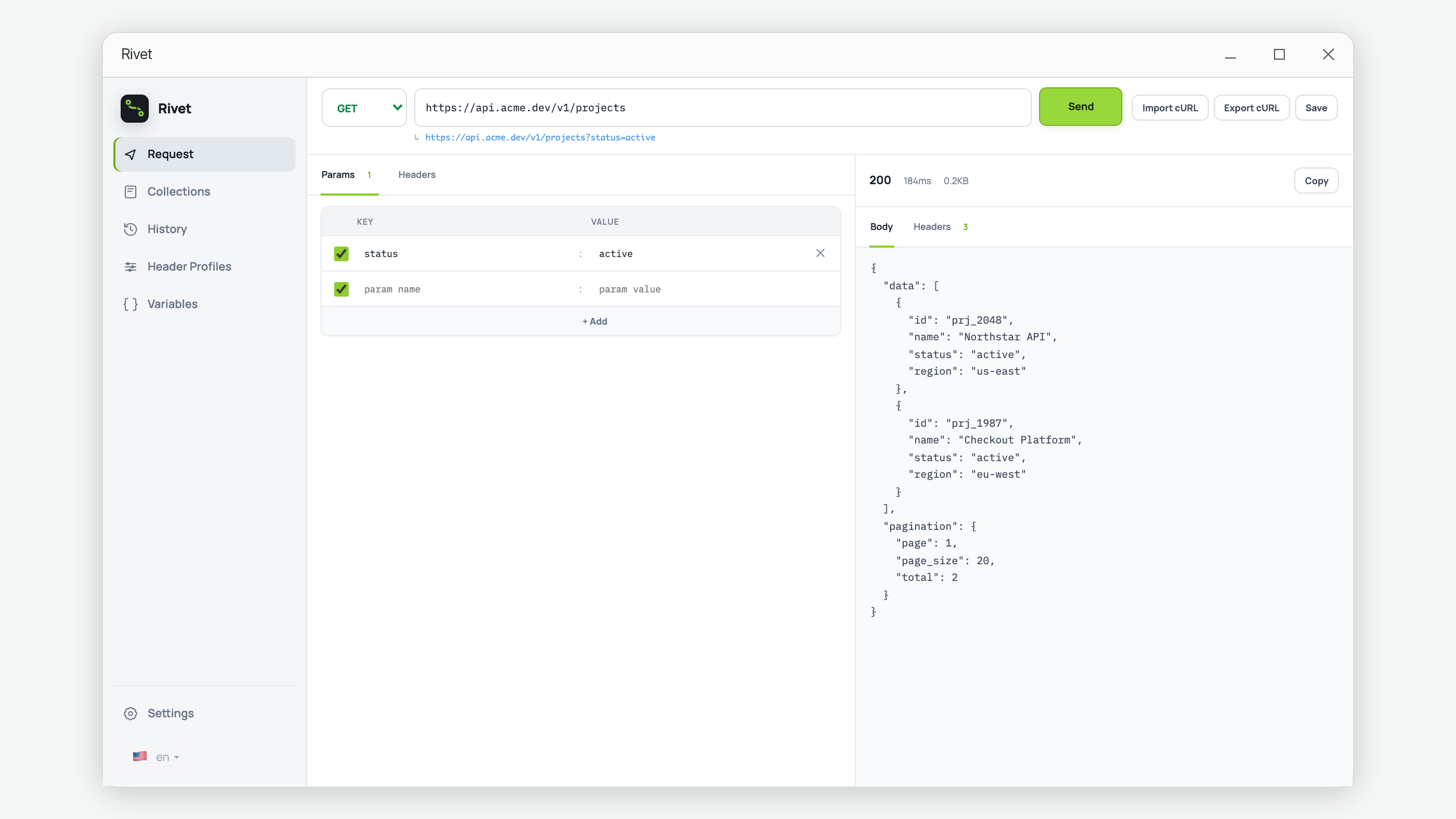
Change one input, send again, and keep the evidence. Rivet stays focused on the details that explain what the server actually received and returned.
Use GET, POST, PUT, PATCH, DELETE, HEAD, or OPTIONS with explicit query parameters, headers, JSON, text, and form data.
Keep status, timing, response headers, and formatted JSON together so a 401, 404, or 500 has useful context.
Open an earlier request from history, restore its values, and test the smallest possible change instead of rebuilding the call.
Create header profiles for authentication or content negotiation and attach them automatically to matching hosts.
Import common cURL commands into an editable request or export a working request for documentation and terminal use.
Saved requests, history, and profiles live in a local workspace. Rivet needs no account and adds no analytics layer.
These screenshots use the same 16:9 composition delivered for the Windows Store, without cropping or stretching.
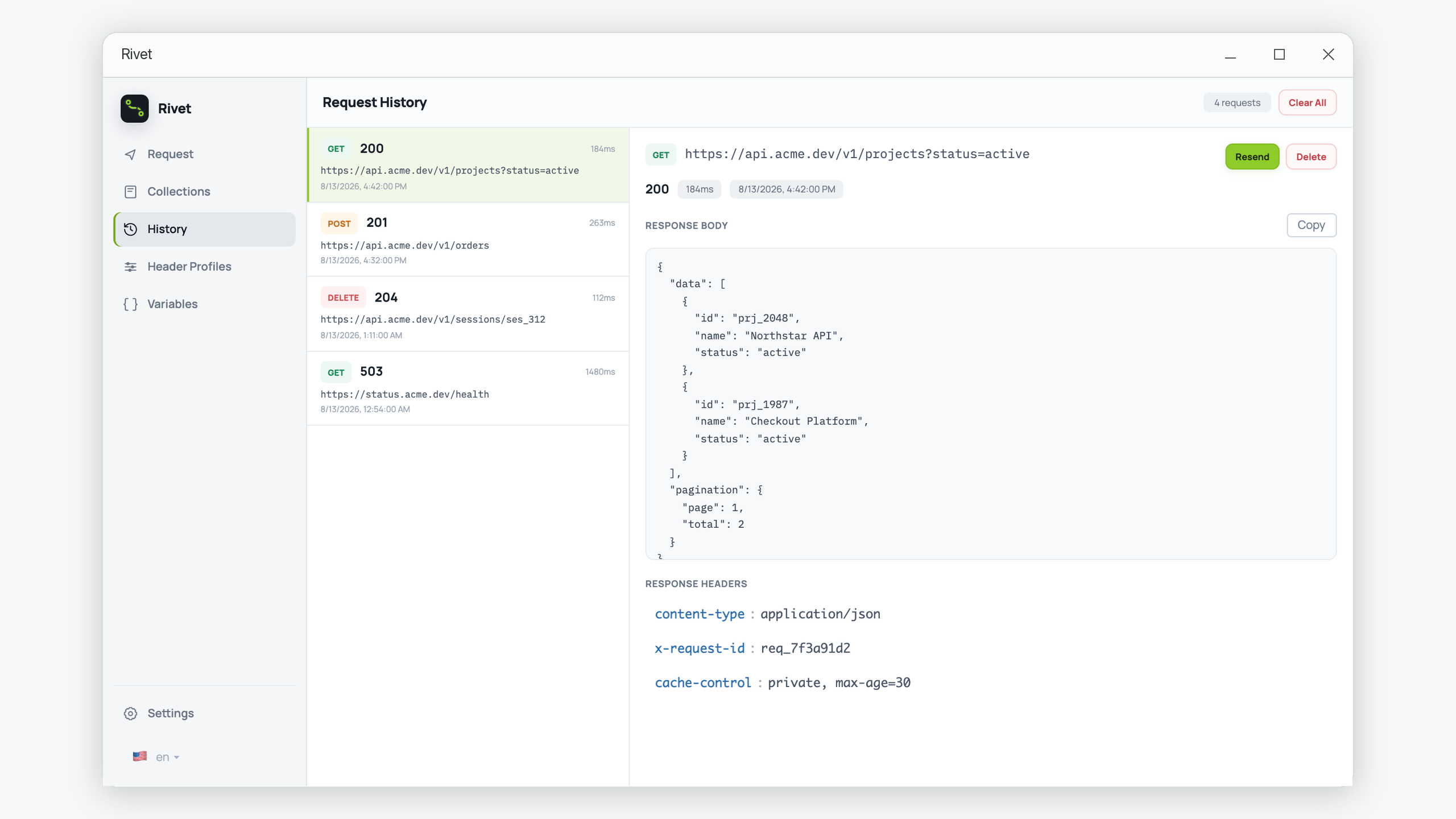
Compare successful and failed calls, inspect the response, then reopen the exact request for another pass.
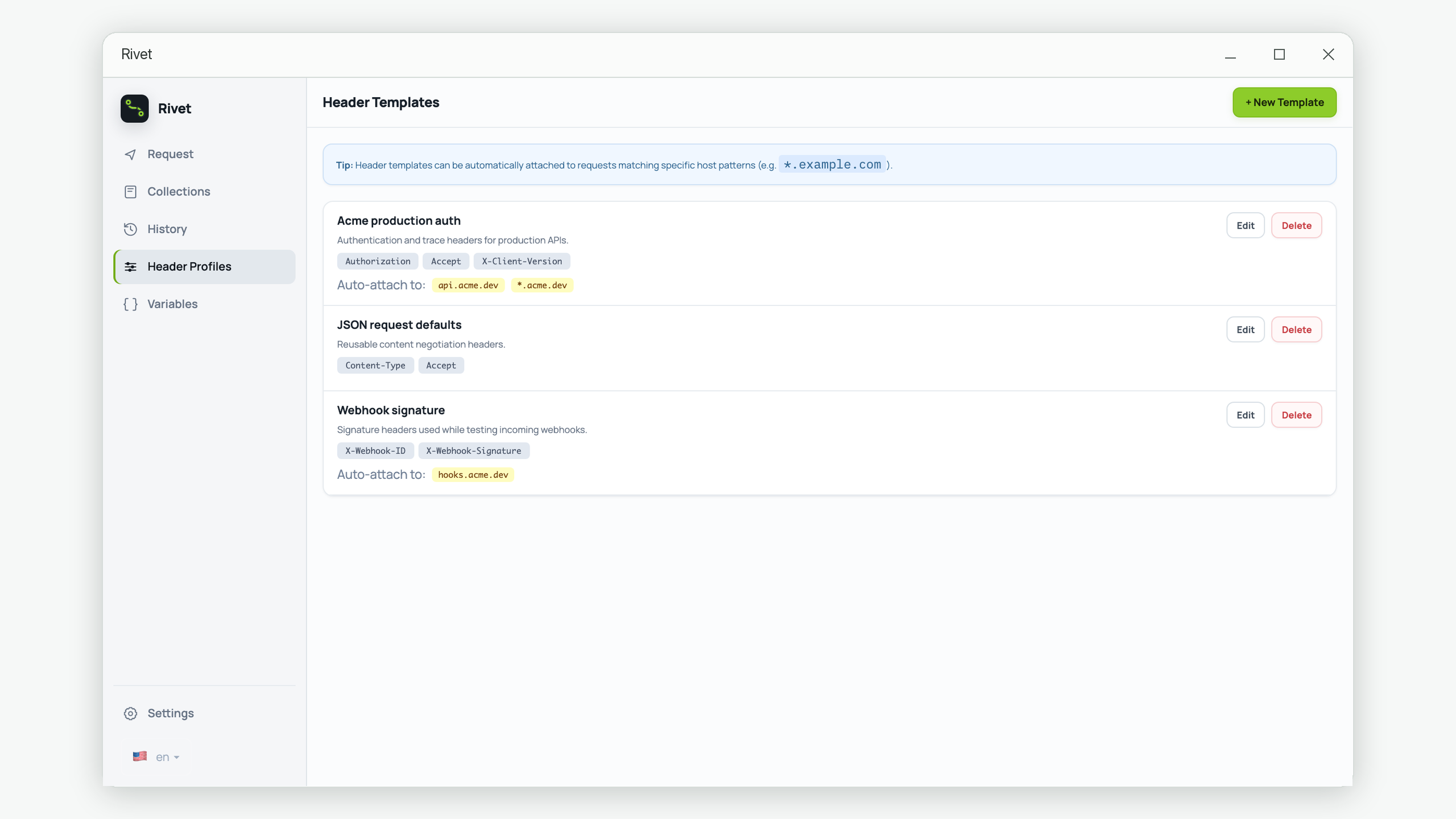
Keep authentication and shared HTTP headers in reusable profiles, including automatic host-pattern matching.
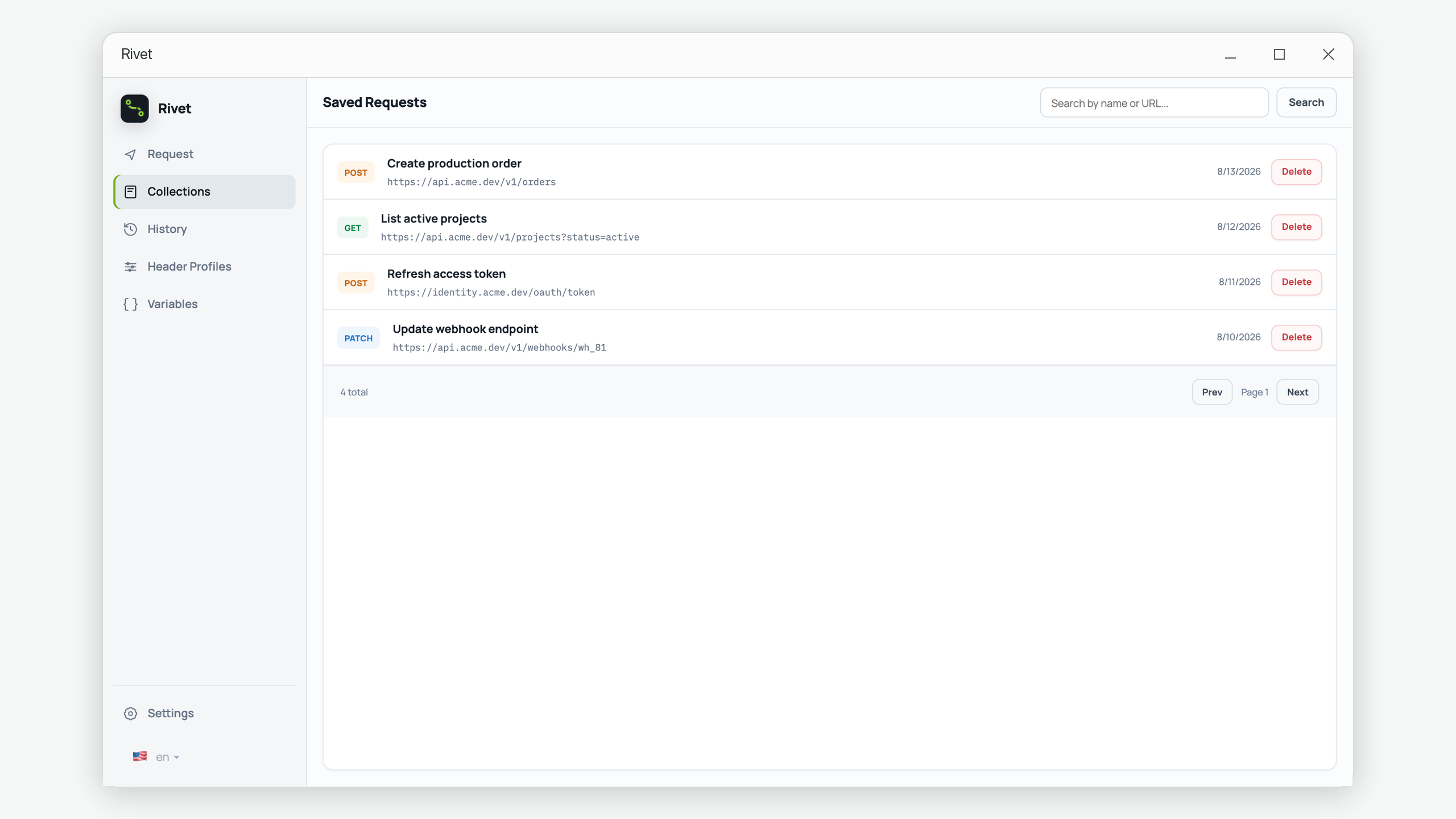
Name a useful request, find it later, and reopen it when the endpoint changes or a regression returns.
Each guide answers a real debugging question with steps and examples that work with cURL or any API client. Rivet is included only where it shortens the workflow.
Build a request from the API contract, verify the status and response, and isolate backend behavior before the UI is ready.
Read the guide →A systematic checklist for missing credentials, broken Bearer headers, expired tokens, scopes, clocks, and the 401-versus-403 distinction.
Diagnose a 401 →Audit a copied command, protect secrets, make inputs editable, save a baseline, and share a reproducible request.
Build the workflow →Use status families as a starting point, preserve a failing request, change one variable at a time, and record useful evidence.
Follow the checklist →Install Rivet on Windows, send the request, and keep the working and failing versions close enough to compare.